Compare 9 top EOR services for startups in 2026. Side-by-side pricing from $99–$650/mo, country coverage, and which EOR fits your stage, from bootstrapped to Series B.

An Employer of Record (EOR) is a third-party organization that legally employs workers on behalf of another company, handling payroll, tax compliance, benefits administration, and employment contracts in countries where the hiring company has no legal entity. For startups, EOR services eliminate the need to incorporate abroad, saving $15,000-$50,000 in setup costs and 3-6 months of registration time per country.
In practical terms, the EOR becomes the legal employer on paper while the startup retains full day-to-day management of the employee’s work, performance, and responsibilities. The EOR handles the administrative and legal burden: drafting compliant contracts, running payroll in local currency, withholding and remitting taxes, administering statutory benefits, and ensuring ongoing compliance with local labor laws.
The global EOR market has grown rapidly, with adoption among startups increasing over 40% year-over-year between 2023 and 2025 (Velocity Global). As of 2026, the market is valued at over $6 billion and projected to reach $12 billion by 2030 (Grand View Research).
Startups hiring their first international employee should understand EOR payroll for startup before comparing providers, because payroll accuracy and statutory compliance affect both employee trust and legal risk.
Want a deeper dive into how EOR services work? Read our complete guide: What Is an Employer of Record (EOR)? A Full Guide →
Startups face a specific set of challenges when hiring globally. Unlike enterprises, they rarely have in-house legal counsel, dedicated HR teams, or the budget to register entities in multiple countries. EOR services solve this by offering a turnkey employment infrastructure.
Key reasons startups choose EOR services:
Choosing between employees and contractors dont forget to read our blog covering all the details.
Setting up a foreign legal entity can take 3-6 months and cost $15,000-50,000 per country. An EOR lets you hire in that same country within days for a monthly fee; often less than $600/employee.
Before comparing individual providers, it helps to identify what type of EOR fits your startup’s current situation. The right choice depends less on features and more on your hiring stage, budget, target regions, and growth trajectory.
Startups hiring in multiple countries should first understand how a Global EOR differs from a single-country EOR.
| Your Situation | Best EOR Type | Recommended Provider | Monthly Cost |
|---|---|---|---|
| Bootstrapped, 1-3 hires, testing a market | Budget EOR | RemoFirst | $199/employee |
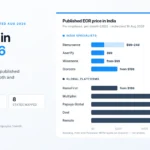
| Hiring specifically in India | Regional specialist | Remunance | $99-249/employee |
| VC-funded, scaling fast, 10+ countries | Full-service platform | Deel or Remote | $599/employee |
| Need HR + IT + payroll unified | Automation-first | Rippling | Custom pricing |
| Regulated industry, complex compliance | Consultative EOR | Atlas HXM | Custom pricing |
| APAC-focused expansion | Regional strength | Multiplier | From $300/employee |
| Analytics-heavy, immigration needs | Enterprise-grade | Papaya Global | From $650/employee |
Pricing transparency: Look for flat per-employee pricing. Watch for hidden setup fees, FX markups, offboarding charges, and benefits administration surcharges. Ask for a Total Cost of Employment (TCE) breakdown.
Owned vs. partner entities: Providers that own their legal entities (like Remote) offer tighter compliance control. Those using third-party partners may have wider coverage but introduce an additional layer of risk.
Country depth vs. breadth: “180+ countries” sounds impressive, but what matters is the depth of operations in your target countries. Ask about local benefits, onboarding speed, and dispute resolution in the specific countries you need.
Onboarding speed: Top providers onboard within 2–5 business days. Some take 2–4 weeks. If speed matters, ask for SLAs.
Support quality: Dedicated account managers vs. shared support queues. At low headcount, you’ll likely get shared support unless you negotiate.
Integration ecosystem: Check compatibility with your existing stack, HRIS, accounting, ATS, and communication tools.
Get a free, personalized recommendation from our advisory team. We will match you with the right EOR based on your team size, target countries, and budget.
Get Free EOR Advice →The table below provides a side-by-side overview of the 9 best EOR providers for startups in 2026, covering pricing, country coverage, and key differentiators.
| Provider | Best For | Countries | EOR $/mo | Contractor $/mo | Key Strength |
|---|---|---|---|---|---|
| Deel | High-growth startups | 150+ | $599 | $49 | Fast onboarding; equity; integrations |
| Remote | Remote-first teams | 180+ | $599 | $29 | Owned entities; IP Guard |
| Remunance | India-focused hiring | India | $99-249 | Custom | Local compliance; lowest cost |
| RemoFirst | Budget startups | 180+ | $199 | $25 | Lowest price; essential compliance |
| Oyster | Distributed teams | 180+ | From $499 | $29 | Country-level compliance depth |
| Rippling | Tech/automation teams | 185+ | Custom | $8 | HR-IT-finance unification |
| Atlas HXM | Complex compliance | 160+ | Custom | Custom | Risk mitigation; consulting |
| Multiplier | APAC scaling | 150+ | From $300 | $40 | APAC/MENA strength |
| Papaya Global | Regulated industries | 160+ | From $650 | $25 | AI compliance; immigration |
EOR Pricing: $599/employee/month
Contractor Pricing: $49/month
Countries Covered: 150+
Best For: VC-funded startups needing fast onboarding, equity support, and deep integrations
G2 Rating: 4.8/5 (3,500+ reviews)
Website: deel.com
Deel is one of the fastest-growing EOR platforms globally. It has expanded rapidly, rolled out new products at speed, and built a user-friendly interface that appeals to startups with small HR teams managing workers across multiple time zones.
The platform supports EOR hiring in over 150 countries, with automated payroll in 120+ currencies, localized contract generation, benefits administration, expense reimbursements, visa sponsorship, and global equity support. Onboarding typically takes just 2–3 business days.
Deel is particularly strong for scaling teams because of its contractor-to-employee conversion workflow, which lets startups safely transition independent consultants to full-time roles without compliance gaps. It also integrates with BambooHR, QuickBooks, Greenhouse, Slack, and most major HRIS/ATS tools.
| Pros | Cons |
|---|---|
Fastest onboarding in the industry (2-3 days) | Premium pricing at $599/mo per employee |
Global equity and stock option support | Contract templates can feel rigid for very small teams |
120+ currency payroll with automated FX | Dedicated account managers only on higher-tier plans |
Deep integration ecosystem | Uses partner entities in some countries (not fully owned) |
Mobile app with in-app chat and time tracking | Offboarding fees may apply in some jurisdictions |
Verdict: Deel is ideal for VC-funded startups that need to hire quickly across multiple countries and want a platform that grows with them from seed to Series C. The price is premium, but the speed, compliance depth, and integration ecosystem justify it for teams scaling fast.
🔗 Related: In-Depth Deel Review & Competitors
EOR Pricing: $599/employee/month
Contractor Pricing: $29/month
Countries Covered: 180+ (owned entities)
Best For: Remote-first product teams with IP sensitivity and data security requirements
G2 Rating: 4.6/5
Website: remote.com
Remote stands out because it owns legal entities in all 180+ countries it operates in. This means Remote directly controls hiring, benefits, and intellectual property enforcement, without relying on third-party local partners. For startups where IP ownership is critical (SaaS, deep tech, biotech), this is a significant advantage.
Remote’s flat-rate pricing of $599/employee/month has no hidden fees or country-based surcharges. Additional services include contractor management at $29/month, a global payroll add-on for entity-owning companies, and Remote IP Guard, a proprietary tool that automatically adds country-specific IP protection clauses to every employment contract.
The platform provides localized benefits, employment contracts, background checks, time-off tracking, and a clean self-service dashboard. It works particularly well for VC-funded companies hiring in talent-rich but legally complex markets.
| Pros | Cons |
|---|---|
Owned entities in 180+ countries (strongest compliance) | Premium pricing may not suit bootstrapped teams |
Remote IP Guard for automatic IP protection | Fewer reporting and analytics features vs. enterprise tools |
Flat-rate pricing, no country surcharges | Limited deep customization for smaller teams |
Strong data security and GDPR compliance | No equity management built-in |
Contractor management at just $29/mo | Onboarding speed averages 3-5 days (not the fastest) |
Verdict: Remote is the strongest choice for startups that prioritize IP protection, data security, and compliance certainty. The owned-entity model provides an extra layer of legal control that partner-based EORs cannot match. Best for product-led and remote-first companies.
🔗 Related: Remote.com In-Depth Review, Pricing & Competitor Comparison
EOR Pricing: $99-249/employee/month
Contractor Pricing: Custom
Countries Covered: India (specialist)
Best For: Startups building engineering, support, or delivery teams in India
Website: remunance.com
Remunance is the most cost-effective and compliance-focused EOR solution for hiring in India. It is purpose-built for India’s complex labor, tax, and statutory compliance landscape – including PF, ESIC, professional tax, income tax (TDS), gratuity, and the four new Labour Codes.
Pricing ranges from $99 to $249 per employee per month, with no setup fees, no lock-in periods, and all statutory compliance included. This makes Remunance one of the most affordable EOR options globally, costing 60–80% less than international EOR providers that charge a flat $599/month regardless of country.
Unlike global EOR platforms that bolt on India compliance as an afterthought, Remunance was built from the ground up around Indian regulatory requirements. This means faster onboarding (typically 2–3 days), quicker dispute resolution, locally tailored benefits, and real-time updates when Indian labor laws change.
Startups that use Remunance typically fall into two categories: (1) global SaaS or product companies outsourcing engineering, QA, or customer support teams to India, and (2) growth-stage firms entering India with fewer than 10 employees before committing to a full legal entity.
| Pros | Cons |
|---|---|
Lowest EOR pricing globally ($99-249/mo) | India-only; no multi-country coverage |
Deep Indian labor law compliance (PF, ESIC, TDS) | No self-service SaaS dashboard (service-led model) |
No setup fees, no lock-in contracts | Less brand recognition vs. Deel/Remote |
Built for India from day one (not retrofitted) | Custom contractor pricing (not listed publicly) |
Eliminates PE risk for foreign companies | Not suited for companies needing 10+ country coverage |
Verdict: If you’re hiring in India, Remunance is the clear choice. No global EOR can match its combination of Indian compliance depth, pricing, and speed. For startups using India as a delivery or engineering hub, it’s the most cost-effective path to compliant hiring.
🔗 Related: Remunance Review: Best EOR for India Expansion | Best EOR Services in India (Full Comparison)
India's labor laws are uniquely complex. Get a free consultation to find the most compliant, cost-effective hiring path for your team.
Get Free India Hiring Advice →EOR Pricing: $199/employee/month
Contractor Pricing: $25/month
Countries Covered: 180+
Best For: Bootstrapped startups needing essential EOR compliance at the lowest price
Website: remofirst.com
RemoFirst entered the EOR market as a price disruptor and still holds the title of the most affordable globally-scaled EOR provider. At $199/employee/month, it lets bootstrapped and pre-seed startups onboard full-time international hires compliantly without stretching already tight budgets.
The platform covers 180+ countries through a partner-entity model and focuses on core EOR functions: compliant employment contracts, payroll with local tax withholdings, basic benefits administration, and time-off tracking. Contractor management is available at $25/month.
RemoFirst deliberately avoids bundling premium add-ons or over-engineering its dashboard. The value proposition is straightforward: compliant employment structures without the extras. Startups that need to meet investor deadlines or ship fast with distributed teams get a clear, low-risk entry point.
| Pros | Cons |
|---|---|
Lowest global EOR pricing ($199/mo) | Uses partner entities (not owned) |
Covers 180+ countries | UI is functional but not polished |
24/7 support included | No mobile app |
No long-term contracts required | Limited integrations vs. Deel/Rippling |
Good for testing 1-2 hires in new markets | Fewer advanced analytics and reporting tools |
Verdict: RemoFirst is the go-to choice for budget-conscious startups that need compliant global hiring without frills. Ideal for testing new markets with 1–2 hires before committing to a more full-featured platform.
EOR Pricing: From $499/employee/month
Contractor Pricing: $29/month
Countries Covered: 180+
Best For: Series A/B startups expanding into multiple regions simultaneously
G2 Rating: 4.4/5
Website: oysterhr.com
Oyster excels at helping startups hire across 180+ countries with deep, country-level compliance guidance. Its built-in localized guides and legal frameworks reduce the friction of hiring in jurisdictions with complex labor regulations.
The platform provides automated multi-currency payroll, compliant contracts, localized benefit provisioning, work permit support, and real-time compliance checks. Its compliance engine is well-integrated into the platform, meaning startup HR teams can scale into new regions without constantly seeking external legal advice.
Pricing starts at $499/employee/month for 1–10 employees, with custom pricing available for larger teams. Oyster’s reporting features are more robust than lighter tools like RemoFirst, with detailed audit logs and documentation workflows.
| Pros | Cons |
|---|---|
Deep country-level compliance guidance | Higher per-seat cost than budget providers |
Strong scalability for multi-region expansion | UI is clean but less extensible than Rippling |
Automated multi-currency payroll | No embedded equity management tools |
Work permit and visa support included | Custom pricing can be opaque for larger teams |
Detailed audit logs and compliance documentation | Best value emerges at 10+ employee scale |
Verdict: Oyster is the best fit for Series A or B startups that need to expand into multiple regions simultaneously with strong compliance guardrails. It offers a balance of structure, automation, and country-specific depth that few platforms match.
EOR Pricing: Custom (modular)
Contractor Pricing: From $8/month
Countries Covered: 185+
Best For: Engineering-led startups wanting to centralize HR, IT, payroll, and device management
G2 Rating: 4.8/5
Website: rippling.com
Rippling goes far beyond a traditional EOR. It offers a multi-layered platform that combines HR, IT, finance, and global employment into a single unified system. For startups that want to centralize onboarding, payroll, device provisioning, app access control, and compliance in one dashboard, Rippling is unmatched.
Rippling’s Unity platform enables granular workflow automation. For example, hiring a developer in Brazil can automatically trigger laptop shipment, grant Slack and GitHub access, configure payroll, and generate compliance documents – all without manual intervention. For CTO-led organizations or ops-heavy teams, this dramatically reduces headcount dependency in HR and IT.
Pricing is modular: base HRIS starts at $8/user/month, with EOR and global payroll modules priced on request. This makes it potentially expensive when all modules are stacked, but highly cost-effective for teams already using Rippling for domestic HR.
| Pros | Cons |
|---|---|
Unified HR-IT-finance platform (unique in EOR space) | Steeper learning curve than simpler EORs |
Deep workflow automation (Unity platform) | Can be expensive when all modules are stacked |
185+ country coverage | May be overbuilt for teams under 20 employees |
Device management and app access provisioning | Custom pricing requires sales conversation |
Strongest integration ecosystem in the market | EOR is one module, not the core product |
Verdict: Rippling is best understood not as an EOR in isolation but as a comprehensive employee operating system. Ideal for product-led, engineering-heavy startups that want to eliminate tool sprawl and automate every operational touchpoint.
🔗 Related: Rippling Review: All-in-One HR & Payroll Platform
EOR Pricing: Custom (retainer or payroll-percentage model)
Countries Covered: 160+
Best For: Startups in regulated industries (fintech, pharma, cybersecurity) with complex onboarding
Website: atlashxm.com
Atlas (formerly Elements Global Services) serves startups with non-standard employment setups that face elevated compliance risk or operate in unpredictable labor markets. Unlike most EOR providers that rely on a product-led, self-serve model, Atlas takes a consultative, white-glove approach with tailored contract structures.
Atlas owns legal entities in multiple countries and supplements this with in-house HR, legal, and compliance expertise. Its HXM (Human Experience Management) platform combines global payroll, immigration support, equity management, time tracking, analytics, and visa processing.
Startups in heavily regulated sectors like fintech, pharmaceuticals, and cybersecurity choose Atlas to reduce regulatory exposure, especially in markets across Africa, Southeast Asia, and the Middle East.
| Pros | Cons |
|---|---|
Consultative approach with custom contracts | Higher cost than SaaS-style EOR platforms |
Strong in complex/emerging markets | Less agile UI than modern competitors |
In-house legal and compliance teams | Longer onboarding timelines |
Immigration and visa processing support | Requires more hands-on coordination |
Shadow payroll and inter-company contract support | Not ideal for simple, fast-scaling use cases |
Verdict: Atlas HXM is for startups entering complex markets with unusual employment structures. It provides legal protection and structural depth that self-serve platforms cannot, but at a higher cost and longer timeline.
EOR Pricing: From $300/employee/month
Contractor Pricing: $40/month
Countries Covered: 150+
Best For: Startups expanding into Asia-Pacific, LATAM, and MENA markets
G2 Rating: 4.7/5
Website: usemultiplier.com
Multiplier has built a strong reputation for customer-centric delivery and competitive pricing, particularly for startups hiring across APAC and emerging markets. Its platform supports both full-time employees and contractors across 150+ countries with a clean mobile-accessible interface.
At $300/month per employee, Multiplier sits in the mid-range between budget providers like RemoFirst and premium platforms like Deel. It offers multi-currency payroll, localized contracts, benefits administration, and expense management.
| Pros | Cons |
|---|---|
| Strong APAC and emerging market coverage | Less comprehensive than Deel for global scale |
| Competitive mid-range pricing ($300/mo) | Integration ecosystem is smaller |
| Good mobile accessibility | Less well-known in US/European markets |
| Customer-centric support model | Limited equity and immigration features |
Verdict: Multiplier is a solid mid-range option for startups focused on APAC expansion. Good value, responsive support, and strong emerging-market coverage.
EOR Pricing: From $650/employee/month
Contractor Pricing: $25/month
Countries Covered: 160+
Best For: Startups in regulated industries needing AI-driven compliance and deep workforce analytics
Website: papayaglobal.com
Papaya Global positions itself as an enterprise-grade EOR with AI-powered compliance, deep workforce analytics, and immigration support. It is the most feature-rich (and most expensive) option on this list, making it best suited for later-stage startups with complex regulatory requirements.
The platform provides AI-driven payroll validation, automated compliance monitoring, cross-border payments through its own payment infrastructure, and detailed workforce analytics dashboards. Immigration and visa sponsorship support is built in.
| Pros | Cons |
|---|---|
| AI-powered compliance and payroll validation | Highest pricing on this list ($650+/mo) |
| Deep workforce analytics and reporting | Overkill for early-stage, simple hiring needs |
| Built-in immigration and visa support | Complex onboarding process |
| Own payment infrastructure for cross-border pay | Longer sales cycle and implementation |
Verdict: Papaya Global is for later-stage startups with complex, multi-country compliance needs and a budget to match. Its analytics and AI capabilities are impressive, but most seed and Series A startups won’t need this level of sophistication.
Tell us your team size, target countries, and budget; we’ll provide a free, unbiased EOR recommendation; no strings attached.
Get Your Free EOR Match →One of the most common questions startup founders ask is whether to use an EOR or register their own legal entity in a target country. The answer depends on headcount, timeline, and long-term commitment to that market.
| Factor | EOR | Own Legal Entity |
|---|---|---|
| Setup Time | 2-7 days | 3-6 months |
| Setup Cost | $0 (monthly fee only) | $15,000-$50,000+ |
| Ongoing Cost | $99-$650/employee/month | Legal, accounting, HR staff costs |
| Compliance Liability | EOR assumes liability | Your company bears full liability |
| IP Ownership | Managed via contract clauses | Direct ownership |
| Best For Headcount | 1-20 employees | 20+ employees (breakeven point) |
| Flexibility to Exit | Easy; terminate EOR agreement | Requires dissolution (costly, slow) |
| Speed to First Hire | Days | Months |
When an EOR makes sense: You’re testing a market, hiring fewer than 20 people, need to move fast, don’t have in-house legal resources, or want to avoid the sunk cost of entity registration before validating demand.
When your own entity makes sense: You have 20+ employees in a country, need direct IP ownership, plan a long-term presence, or operate in a market where entity registration is required for contracts or licenses.
🔗 Related: Top 10 Benefits of Partnering with an Employer of Record
Monthly EOR fees are just one part of the total cost. Understanding the full cost structure helps you avoid surprises and compare providers accurately.
Most EOR providers include these in their standard monthly rate: compliant employment contracts, local payroll processing, tax withholding and filing, statutory benefits administration (pension, health insurance, social security), time-off tracking, and basic HR support.
| Model | How It Works | Best For | Example Providers |
|---|---|---|---|
| Flat per-employee | Fixed $/month regardless of salary | Predictable budgeting | Deel; Remote; Remunance; RemoFirst |
| Percentage of salary | 8-15% of gross salary per month | Lower-salary markets | Some Atlas HXM contracts |
| Modular/add-on | Base fee + modules | Customizable stacks | Rippling |
| Tiered volume | Price drops with headcount | Scaling teams | Oyster; Multiplier |
Always ask your EOR provider for a TCE estimate per country before signing; this is the only way to do an apples-to-apples comparison across providers.
Coverage numbers (“180+ countries”) are marketing metrics. What matters is operational depth in your target regions. This matrix shows where each provider has the strongest on-the-ground presence.
| Provider | APAC | LATAM | Europe | Africa | MENA | North America |
|---|---|---|---|---|---|---|
| Deel | Strong | Strong | Strong | Good | Good | Strong |
| Remote | Strong | Strong | Strong | Strong | Good | Strong |
| Remunance | India only | Strong; Partner | Strong; Partner | Strong; Partner | Strong; Partner | Limited |
| RemoFirst | Good | Good | Strong | Limited | Limited | Good |
| Oyster | Good | Good | Strong | Good | Good | Good |
| Rippling | Good | Good | Strong | Limited | Limited | Strong |
| Atlas HXM | Strong | Good | Good | Strong | Strong | Good |
| Multiplier | Strong | Good | Good | Limited | Good | Good |
| Papaya Global | Strong | Good | Strong | Good | Good | Strong |
Best options: RemoFirst ($199/mo) or Remunance ($99–$249/mo for India)
At this stage, every dollar counts. You need basic compliance, fast onboarding, and no lock-in contracts. Avoid premium platforms until your hiring volume justifies the cost.
Best options: Deel ($599/mo) or Oyster (from $499/mo)
With seed funding, you can afford a more capable platform. Look for integrations with your ATS, payroll automation, and contractor conversion support. Deel’s speed and Oyster’s compliance depth both work well at this stage.
Best options: Remote ($599/mo) or Rippling (custom)
At this point, IP protection, data security, and operational efficiency matter more. Remote’s owned-entity model provides legal certainty. Rippling’s automation reduces the need for additional ops headcount.
Best options: Rippling (custom) or Atlas HXM (custom)
With 30+ international employees, you’re likely evaluating when to transition from EOR to entity registration in key markets. Rippling’s unified platform scales well. Atlas provides the consultative support needed for complex, multi-jurisdiction setups.
Not all EOR providers are created equal. Watch for these warning signs when evaluating options:
Peorient has helped 200+ startups find the right EOR, PEO, and global employment solution; tell us about your hiring plans and we’ll give you an honest, unbiased recommendation.
Book Your Free Consultation →EOR pricing for startups ranges from $99 to $650+ per employee per month, depending on the provider and country. Budget options like RemoFirst start at $199/month, while premium platforms like Deel and Remote charge $599/month. Regional specialists like Remunance offer India-specific EOR services starting at just $99/month. Always ask about hidden fees including setup charges, FX markups, and offboarding costs.
An EOR becomes the full legal employer of your international workers, taking on 100% of employment liability. A PEO (Professional Employer Organization) enters into a co-employment arrangement where liability is shared. EORs are used for international hiring without a local entity. PEOs are typically used domestically or where the company already has an entity. For global startups without entities abroad, an EOR is almost always the right choice.
Yes. EOR services exist specifically for this purpose. An EOR lets you hire full-time employees in a country where you have no legal presence, handling all employment compliance on your behalf. Most startups use an EOR until they reach 15–20+ employees in a single country, at which point entity registration becomes more cost-effective.
Most EOR providers can complete onboarding in 2–7 business days, including contract generation, compliance setup, and payroll enrollment. The fastest providers (Deel, Remunance) can onboard within 2–3 days. Some countries with more complex requirements (e.g., work permit processing) may take 2–4 weeks.
Yes. EOR arrangements are legal in the vast majority of countries worldwide. The EOR becomes the legal employer while the client company manages the employee’s daily work. However, a few countries have restrictions or specific requirements around EOR usage, so it’s important to verify with your provider for each target country.
Key risks include: the EOR using unreliable third-party sub-partners, unclear IP ownership in employment contracts, hidden fees that inflate the total cost of employment, and potential Permanent Establishment (PE) tax risk if the EOR arrangement isn’t structured properly. Choose providers with transparent partner networks, strong IP clauses, and clear pricing.
The typical breakeven point is 15–20 employees in a single country. At that scale, the cumulative monthly EOR fees often exceed the cost of registering and maintaining your own entity. Other triggers include needing direct IP ownership, government contract requirements, or local licensing that requires an entity.
Yes. Most major EOR providers (Deel, Remote, Oyster, Multiplier) offer contractor-to-employee conversion workflows. This is critical for startups that initially engage workers as independent contractors but need to convert them to full-time status to avoid misclassification risk.
The cheapest globally-available EOR is RemoFirst at $199/employee/month. For India-specific hiring, Remunance offers the lowest pricing at $99–$249/employee/month with full statutory compliance included. Some newer entrants offer rates below $199, but typically with more limited coverage or service quality.
The EOR includes IP assignment clauses in employment contracts, ensuring that all work product created by the employee belongs to your company, not the EOR. Remote offers the strongest IP protection with its proprietary IP Guard tool, which automatically adds country-specific IP clauses to every contract. Always verify that IP assignment is explicitly covered in the employment agreement.
Many EOR providers offer visa and work permit support, including Deel, Remote, Oyster, Atlas HXM, and Papaya Global. The scope varies: some handle the full visa application process, while others provide guidance and coordination. Visa sponsorship typically incurs additional fees beyond the standard EOR monthly rate.
An EOR takes on legal employment responsibility for your international workers. HR outsourcing covers administrative HR functions (recruitment, training, performance management) without assuming legal employer status. Startups often use both: an EOR for international compliance and an HR outsourcing provider for operational HR support.

Written by
Director of Global Hiring Advisory · 6+ years experience
Arjun runs the global hiring advisory practice at Peorient. He previously led APAC operations at an EOR startup and advised at Singapore's EDB, overseeing workforce launches in 18 countries across EOR, PEO, and subsidiary models.
US Employee Benefits Guide 2026: Costs & Requirements
US employee benefits are less about a long federal checklist and more about health insurance, state rules and competitive expectations. For a professional hire, budget roughly 25–35% above base salary before any EOR fee, then model family coverage and the employee’s work state separately.