Top HRIS companies provide software solutions to manage employee data, payroll, benefits, recruitment, and workforce analytics in one platform. These systems help businesses automate HR tasks, improve compliance, and streamline workforce management for companies of all sizes.
Blog
Top HRIS Companies of 2026: An Advisor's Guide
Top HRIS companies provide software solutions to manage employee data, payroll, benefits, recruitment, and workforce analytics in one platform. These systems help businesses automate HR tasks, improve compliance, and streamline workforce management for companies of all sizes.
Choosing a Human Resource Information System (HRIS) is crucial for any business today. The right system boosts efficiency, empowers staff, and provides insights for growth. On the flip side, a poor choice can cause workflow issues and costly data migrations. With many options available, finding the right fit can be tricky for HR leaders.
This guide makes choosing easier. It provides a clear framework and a list of top companies. It fits the needs of startups and large enterprises alike.
What is an HRIS? A Foundation for Your People Operations
An HRIS is software that centralizes important employee data and HR tasks. It acts as the single source of truth for an organization’s most valuable asset: its people. An HRIS automates basic tasks.
This helps HR teams focus on key goals, such as talent development and employee engagement. Think of it as the backbone of the employee lifecycle, from hiring to retirement.
Key Functions of a Modern HRIS Platform
A good HRIS can vary by provider, but it typically covers important areas for managing people:
Core HR: A central employee database, digital record keeping, and secure document storage. It manages employee information, job history, and personal details.
Payroll and Benefits Administration: Automates payroll and tax withholdings. It also manages employee benefits. This includes health insurance and retirement plans.
Onboarding and Offboarding: Makes it easy for new hires and departing employees. Use digital forms and task lists.
Time, Attendance, and Leave Management: It tracks hours and manages schedules. It also automates requests for time off. This helps keep payroll accurate.
HRIS vs. HRMS vs. HCM: What’s the Difference?
These acronyms can be confusing, but they differ mainly in scope. An HRIS focuses on core data management and admin tasks. An HR Management System (HRMS) has HRIS features and adds tools for talent management.
These tools include performance tracking. Human Capital Management (HCM) includes everything about managing employees. It has advanced features, such as analytics and succession planning.
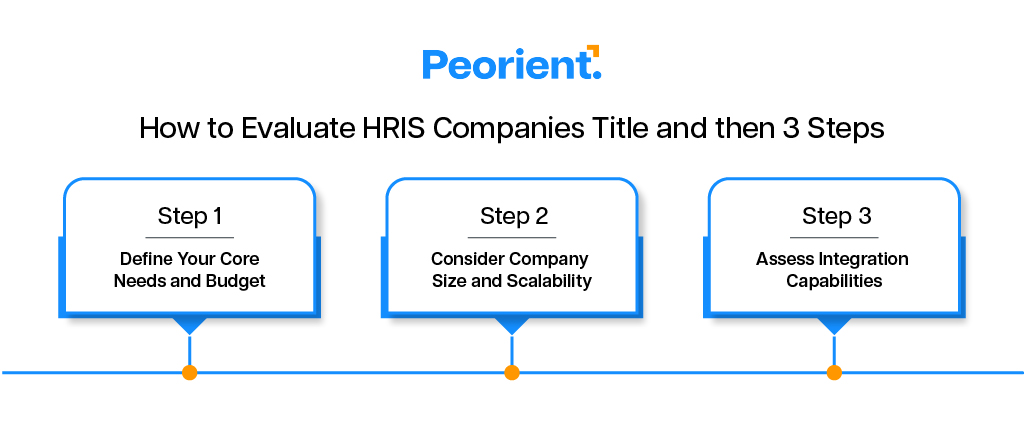
How to Evaluate HRIS Companies: A 3-Step Framework
Choosing the right HRIS is a strategic decision that impacts every employee. To make an informed choice, businesses should follow a structured evaluation process. This ensures the selected platform meets current and future needs.
Step 1: Define Your Core Needs and Budget
Start by identifying “must-have” and “nice-to-have” features. Involve all relevant stakeholders, including HR, finance, and IT. Find main issues in your HR processes, like payroll problems or onboarding challenges. Set a budget that makes sense. Calculate it per employee and per month to help narrow your choices.
Step 2: Consider Company Size and Scalability
Your HRIS should fit your current size and support future growth. A system for a 50-person startup might not work for a 500-person company. Ask how the system scales and what pricing tiers are available. A scalable solution helps avoid costly migrations later on.
Step 3: Assess Integration Capabilities
An HRIS should connect easily with other critical systems. Check how well it fits with your accounting software and project management tools. A well-integrated system saves time and reduces errors. Look for providers offering pre-built integrations or an open API for custom connections.
A Curated List of Top HRIS Companies in 2026
To assist you in your search, we analyzed the market. We’ve grouped top HRIS providers by common business needs. This approach helps you focus on a relevant shortlist of vendors.
Best for Startups & Small Businesses
For small businesses, key worries include ease of use, cost, and full functionality. These systems streamline core processes without needing a dedicated IT team.
Gusto: Best for payroll-focused businesses. Gusto provides easy-to-use payroll and benefits management. This makes it a favorite for small businesses in the U.S.
BambooHR: Known for its excellent user experience and core HR features. BambooHR is excellent at centralizing records and managing time off. This makes it ideal for companies that prioritize culture.
Best for Scaling & Mid-Sized Companies
As companies grow, their needs shift toward customization and robust features. These platforms offer the flexibility required for a rapidly growing workforce.
Rippling: A powerful platform that integrates HR with IT and finance. Rippling automates payroll and benefits. It also handles app provisioning and device management. This creates one easy-to-use management platform.
HiBob: Designed for modern companies, HiBob fosters culture and engagement. Its easy-to-use interface is perfect for mid-sized businesses that want to keep talent.
Best for Global & Remote-First Teams
For organizations hiring internationally, key priorities include multi-country payroll and compliance. These platforms handle the complexities of global employment.
Deel: A complete solution. It has HRIS features. It provides global payroll and Employer of Record (EOR) services. Deel enables hiring and managing employees in over 150 countries, ensuring compliance.
Oyster: Like Deel, Oyster specializes in global employment. It makes hiring, payroll, and benefits easier. It emphasizes compliant international hiring.
HRIS vs. EOR: A Platform or a Partner?
Confusion often arises between HRIS and EOR services. An HRIS is a tool for managing existing employees. In contrast, an EOR legally employs workers on your behalf in locations where you lack a local entity. Understanding this difference is crucial for businesses planning global expansion.
When an HRIS is Enough for Your Business
An HRIS is sufficient if your company hires only within its home country. It automates and manages internal HR processes. If your business has legal entities in each country, an HRIS can help. It standardizes processes across all locations.
When You Need an Employer of Record (EOR)
You need an EOR when you want to hire talent internationally without setting up a foreign entity. An EOR handles the legal and administrative sides of employment. This includes payroll and ensuring compliance with local laws. This allows your business to tap into global talent quickly and legally.
How Independent Advice Removes the Guesswork
The global HR landscape today is complex. It includes HRIS platforms, EOR services, and payroll providers. There’s often confusing overlap among these elements. Choosing the right combination of tools and services is a high-stakes decision.
An independent advisor makes things easier. They focus on your business goals, budget, and growth plans. They give you clear, personalized advice. This ensures you build a global HR stack that is both effective and cost-efficient.
Conclusion
Finding the right HRIS for your organization takes careful research and planning. It’s a journey worth taking. Using a clear framework helps you choose the right platform for your business. When you understand the different solutions for each stage, you can choose one. This choice will tackle today’s problems and help with your future goals.
For businesses that want to grow their teams internationally, it’s important to understand HRIS technology. It also helps to know how it interacts with global employment partners. This knowledge is key to success.
If you need help building the right foundation for your global team, our advisors are here to help. Get Free, Unbiased Advice on Your Global HR Stack and benefit from our independent reviews of over 50 providers.
Our personalized matching and 100% free advisory service ensure you make the right choice, confidently.
Frequently Asked Questions About HRIS Companies
What is the average cost of an HRIS system?
The cost of an HRIS can vary a lot. It depends on the provider, chosen features, and how many employees you have. Most systems are priced on a per-employee, per-month (PEPM) basis, which can range from as low as $5 to over $30 PEPM. Many vendors also charge a one-time implementation fee.
How long does it take to implement a new HRIS?
Implementation timelines change. They depend on how complex the system is and how big the company is. For small businesses using a straightforward platform, implementation can take a few weeks. For large companies with complex data migration, the process may take months.
Can an HRIS handle international payroll and compliance?
Some advanced HRIS platforms, such as Deel, are global. They handle payroll in many countries. They also ensure compliance with local laws. However, most standard HRIS systems are country-specific. To comply globally without a local entity, you often need an Employer of Record (EOR) service.
What are the most important features in an HRIS for a small business?
For a small business, key features include:
A reliable employee database
Streamlined payroll processing
Easy-to-use time and attendance tracking
Strong onboarding tools and basic reporting capabilities are also highly valuable.
Is it difficult to switch from one HRIS company to another?
Changing HRIS providers can be tough. It needs careful planning, especially for data migration. It includes exporting all past employee and payroll data from the old system. Then, we must ensure that it is accurately imported into the new system. Working with the new provider's implementation team is crucial for a smooth transition.
Still comparing
EOR options?
Get a sample Peorient report showing how we compare provider costs and explain our recommendations.