
Best Employer of Record Germany: The Complete Guide (2026)
An Employer of Record (EOR) in Germany enables businesses to hire and manage employees legally without establishing a local entity. EOR services handle payroll, tax compliance, contracts, benefits, and labor law requirements so companies can expand into Germany quickly and compliantly.
- August 6, 2026

An Employer of Record (EOR) in Germany is a licensed local legal entity that employs workers on behalf of a foreign company. The EOR handles the employment contract, payroll, social security contributions, tax filings, and labor law compliance; while your company retains full operational control. This lets you hire German employees legally within 2-4 weeks, without incorporating a GmbH or establishing a local branch.
Germany is one of Europe’s most attractive hiring markets — and one of its most legally precise. The country’s employment framework is designed not for flexibility, but for stability, employee protection, and long-term certainty.
For companies hiring from outside Germany, this creates a specific challenge. Employment decisions carry legal weight from day one. Payroll must be processed correctly. Contracts must meet strict written requirements. Terminations require documented grounds and defined notice periods.
An Employer of Record in Germany resolves this complexity. If you are new to the concept, our complete guide to what an Employer of Record is covers the global model in detail. This guide focuses specifically on Germany — how EORs work under German law, what compliance requires, how to evaluate providers, and what it costs.
What Is an Employer of Record in Germany?
An Employer of Record in Germany is a registered German legal entity that formally employs your workers. It is the legal employer of record with the German authorities, responsible for tax filings, social security contributions, employment contracts, and compliance with the Bürgerliches Gesetzbuch (BGB) and the Kündigungsschutzgesetz (KSchG).
Your company operates as the client. You direct the employee’s day-to-day work, set performance expectations, and manage the commercial relationship. The EOR manages the legal employment relationship.
What the EOR Does
What Your Company Does
Employment in Germany is governed by a comprehensive framework overseen by the German Federal Ministry of Labour and Social Affairs (BMAS). Companies using an EOR benefit from the provider’s existing compliance infrastructure within this framework, without needing to build it from scratch.
Germany's Arbeitnehmerüberlassungsgesetz (AÜG) (the Temporary Employment Act) governs labor leasing arrangements. EOR structures must be carefully distinguished from AÜG-regulated agency labor to avoid classification risk. A reputable EOR will explain this distinction and ensure compliant structuring.
How an Employer of Record Works in Germany: Step-by-Step
Understanding the operational flow helps companies set realistic expectations before engaging an EOR provider.
- Client agreement signed. Your company and the EOR sign a services agreement defining responsibilities, fee structure, and terms.
- Employment contract issued. The EOR drafts and issues a compliant German employment contract (required in writing under §2 NachwG) covering compensation, hours, notice periods, and benefits.
- Employee onboarded. Timeline is typically 2–4 weeks from contract signing. The employee is registered with German social insurance authorities.
- Monthly payroll processed. The EOR calculates gross-to-net pay, withholds Lohnsteuer (wage tax), and remits contributions to all 5 social insurance schemes.
- Ongoing compliance managed. The EOR monitors regulatory updates, manages benefits entitlements, handles sick leave, and administers parental leave as required.
- Terminations handled with legal guidance. The EOR reviews grounds, prepares documentation, manages notice periods, and coordinates Works Council consultation where required.

For a deeper look at how EOR services benefit organisations at different growth stages, see our guide to the top benefits of partnering with an Employer of Record.
German Labour Law: What Every EOR Must Follow
Germany’s employment framework is anchored in several overlapping legal instruments. An EOR operating in Germany must comply with all of them simultaneously.
- Bürgerliches Gesetzbuch (BGB) — German Civil Code. Governs employment contracts, obligations, and notice requirements.
- Kündigungsschutzgesetz (KSchG) — Employment Protection Act. Applies after 6 months of employment in companies with 10+ employees. Restricts dismissals to three valid grounds: operational, personal, or conduct-related.
- Allgemeines Gleichbehandlungsgesetz (AGG) — General Equal Treatment Act. Prohibits discrimination on protected characteristics.
- Betriebsverfassungsgesetz (BetrVG) — Works Constitution Act. Mandates consultation with the Works Council before dismissals, certain role changes, and other decisions.
- Arbeitszeitgesetz (ArbZG) — Working Hours Act. Limits daily working hours to 8 hours (extendable to 10 hours with compensation). Rest periods of at least 11 hours required.
- Tarifvertragsgesetz (TVG) — Collective Bargaining Agreements Act. Industry-level CBAs can set minimum wages, benefits, and conditions above statutory minimums.
- Nachweisgesetz (NachwG) — Evidence Act. Requires written employment contracts with specific information delivered on day one.
- Datenschutz-Grundverordnung (DSGVO/GDPR). Employee personal data processed in Germany is subject to strict GDPR. EOR must act as a compliant data processor under Article 28.
If 5 or more employees are employed at an establishment, employees have the right to elect a Works Council (Betriebsrat). Once established, the Works Council must be consulted before dismissals, role changes, working time adjustments, and certain hiring decisions. Failure to consult renders a dismissal legally invalid. Ask every EOR candidate how they manage Works Council obligations.
German Payroll, Taxes, and Social Security: Exact Contribution Rates
German payroll is one of the most precisely regulated in Europe. Employers must calculate, withhold, and remit contributions accurately every month. The following table shows the actual contribution rates as of 2026.
| Contribution Type | Employer Share | Employee Share | Total Rate |
|---|---|---|---|
| Pension Insurance (Rentenversicherung) | 9.3% | 9.3% | 18.6% |
| Health Insurance (Krankenversicherung) | 7.3% | 7.3% | 14.6% |
| Unemployment Insurance (Arbeitslosenversicherung) | 1.3% | 1.3% | 2.6% |
| Nursing Care Insurance (Pflegeversicherung) | 1.7–1.95% | 1.7–1.95% | 3.4–3.9% |
| Accident Insurance (Unfallversicherung) | ~1.2% | 0% | ~1.2% |
| TOTAL (approx.) | ~20.8% | ~19.8% | ~40.6% |
Important: Health insurance rates vary by provider. The statutory minimum is 14.6%, but most Krankenkassen (health funds) apply an additional contribution (Zusatzbeitrag) averaging 1.7–2.5%, split equally. Nursing care contributions are higher in some states (e.g., Saxony, where employees pay an additional 0.5% without employer offset).
Wage tax (Lohnsteuer) is withheld at source based on the employee’s tax class (Steuerklasse I–VI). The EOR is responsible for correct classification and monthly remittance to the Finanzamt.
Unemployment insurance rates and entitlements are administered by the Bundesagentur für Arbeit. The current rate is 2.6% of gross salary, shared equally at 1.3% each.
For a German employee earning €60,000 gross annually, total employer cost is approximately €72,000 to €74,000 when social contributions are included (∼20–23% on top of gross salary). This must be factored into hiring budgets before EOR fees are added.
For a broader view of how payroll costs compare across global markets, see our global payroll services cost guide.
Employee Benefits and Statutory Entitlements in Germany
German law mandates a comprehensive set of employee entitlements. An EOR must administer all of these correctly. Non-compliance creates legal liability and damages employee trust.
- Annual Leave: Minimum 20 days per year based on a 5-day work week (§3 BUrlG). Most employment contracts in Germany provide 25–30 days. Public holidays (9–13 per state) are additional.
- Sick Pay (Entgeltfortzahlung): Employers must pay full salary for up to 6 consecutive weeks per illness episode (§3 EFZG). After 6 weeks, health insurance takes over (Krankengeld). This obligation exists from day one of employment.
- Parental Leave (Elternzeit): Employees are entitled to up to 3 years of parental leave per child (§15 BEEG). During this period, the employment relationship is protected. EOR must manage leave administration and coordinate Elterngeld (parental allowance) processes.
- 13th Month Salary: Not legally mandated but common in many industries and Tarifvertrag agreements. EOR must identify if applicable to the role.
- Company Pension (bAV): Employees have the right to deferred compensation into a company pension. EOR must facilitate this if requested.
- Christmas Bonus (Weihnachtsgeld): Common but contractual, not statutory. If promised, it becomes a binding entitlement.
Ready to Hire in Germany?
Ensure 100% compliance with local labor laws through Peorient's specialized EOR solutions. Partner with experts while you scale your team.
Get a Compliance ConsultationEmployment Contracts: What Must Be Included Under German Law
Under the Nachweisgesetz (NachwG), every employment contract in Germany must be issued in written form and provided on the first day of employment. Verbal agreements or delayed documentation expose employers to fines of up to €2,000 per violation.
A compliant German employment contract must include:
- Full name and address of both employer and employee
- Start date and, if applicable, end date (for fixed-term contracts)
- Place of work
- Job title and a brief description of duties
- Basic salary and any additional components (bonuses, allowances)
- Working hours (weekly hours, break times)
- Annual leave entitlement
- Notice periods (statutory or contractual, cannot go below statutory minimums)
- Reference to applicable Tarifvertrag (collective bargaining agreement), if any.
Probation periods: Allowed up to 6 months. During probation, notice periods are shortened to 2 weeks. Dismissal during probation is simpler but not completely unrestricted, discriminatory terminations remain illegal.
Fixed-term contracts: Permitted without justification for up to 2 years (§14 TzBfG). After 2 years, or after more than 3 renewals, conversion to permanent employment is required. An EOR must track these timelines closely.
Termination, Notice Periods, and Employee Protections in Germany
Termination is the highest-risk area in German employment law. After the probation period, and in companies with more than 10 employees, the Kündigungsschutzgesetz (KSchG) applies. This means every dismissal must have a valid legal ground: operational reasons (betriebsbedingte Kündigung), personal reasons (personenbedingte Kündigung), or conduct-related reasons (verhaltensbedingte Kündigung).
Notice periods are determined by tenure and cannot fall below statutory minimums under §622 BGB:
| Tenure | Minimum Notice Period | Key Notes |
|---|---|---|
| Probation (up to 6 months) | 2 weeks | No KSchG protection |
| < 2 years | 4 weeks (to 15th or month-end) | KSchG applies after 6 months |
| 2 years | 1 month (to month-end) | Social justification required |
| 5 years | 2 months (to month-end) | Works Council must be consulted |
| 8 years | 3 months (to month-end) | Written notice mandatory |
| 10 years | 4 months (to month-end) | Documentation critical |
| 12 years | 5 months (to month-end) | Settlement common in disputes |
| 15 years | 6 months (to month-end) | Labour court favours employee |
| 20+ years | 7 months (to month-end) | High severance risk if challenged |
German labour courts (Arbeitsgerichte) are employee-friendly by design. If a termination is challenged and documentation is incomplete, courts frequently award severance or reinstatement. The average settlement is 0.5 months' salary per year of employment. An experienced EOR reviews termination risk before action is taken; not after.
Employer of Record Germany: Costs and Pricing Models
EOR pricing in Germany is not standardised. Providers charge differently based on their model (direct entity vs. partner-led), the scope of services included, and the number of employees managed.
- Per-employee monthly fee: The most common model. Ranges from €299 to €800+ per employee per month. Direct-entity providers tend to price higher (€499–€699) but offer stronger compliance depth.
- Setup fees: Some providers charge a one-time onboarding fee of €500–€2,000. Others include this in the monthly fee. Always clarify.
- Termination handling fees: Often charged separately (€500–€3,000+) and not included in the base monthly rate. This is a critical hidden cost to identify upfront.
- Legal advisory: Premium providers include German legal consultation. Others charge per-hour. Confirm what is covered before signing.
For a full breakdown of how global payroll and EOR services are priced across different markets and models, see our payroll outsourcing definitive guide.
For a team of 5 employees at €599/month per person: EOR monthly cost = ∼€3,000/month (∼€36,000/year). Compare this to entity setup (€20,000 to €50,000 upfront + €15,000 to €30,000/year in accounting, legal, and HR overhead). For teams under 15 employees, EOR is almost always more cost-effective in the first 2–3 years.
Before comparing monthly EOR fees, understand what EOR payroll and compliance actually include in the invoice.
Best Employer of Record Germany: Full Provider Comparison (2026)
The table below compares the leading EOR providers available in Germany based on their payroll model, compliance depth, pricing, and optimal use case. Prices are estimates; always request a custom quote.
| Provider | Est. Price/mo | Payroll Model | Compliance | Best Fit |
|---|---|---|---|---|
| WorkMotion | €349–599 | Direct entity | ★★★★★ | Germany-first |
| Remote | €599 flat | Direct entity | ★★★★★ | Distributed |
| Deel | €499–699 | Hybrid | ★★★★ | Multi-country |
| Mercans | Quote | Direct entity | ★★★★ | Compliance-heavy |
| Velocity Global | Quote | Hybrid | ★★★★ | Regulated |
| Safeguard | Quote | Hybrid | ★★★★ | Complex payroll |
| Papaya Global | €450–700 | Partner-led | ★★★ | Finance-led |
| Oyster | €399–599 | Partner-led | ★★★ | Startups |
| G-P | Quote | Partner-led | ★★★ | Enterprise |
| Lano | €299–499 | Partner-led | ★★★ | EU Hiring |
Find the Right EOR for Germany
Let Peorient navigate these providers and find the perfect compliance partner for your needs.
Book a Call TodayProvider Profiles: Key Differentiators
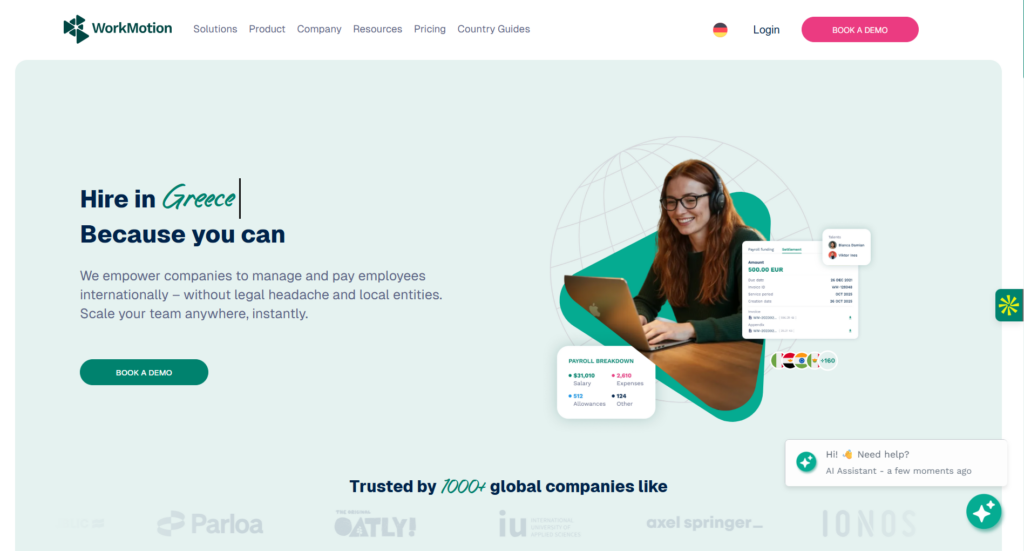
WorkMotion: Germany-headquartered EOR with direct entity and a local German HR team. Best-in-class for Germany-specific compliance including Works Council management and Tarifvertrag monitoring. Preferred for companies building dedicated German teams.
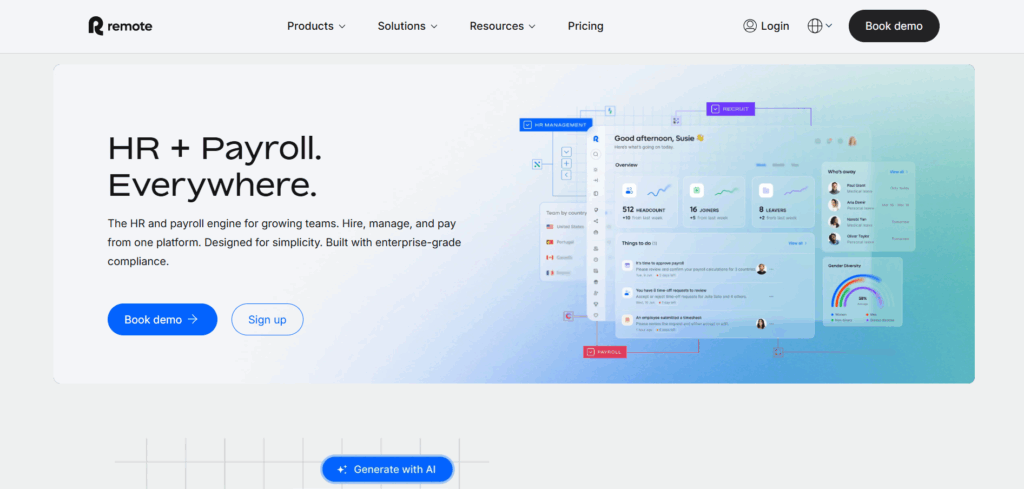
Remote: Owns its German legal entity. Flat-fee pricing model (no per-employee scaling cost after first hire) makes it attractive for growing teams. Strong benefits platform and consistent compliance processes.
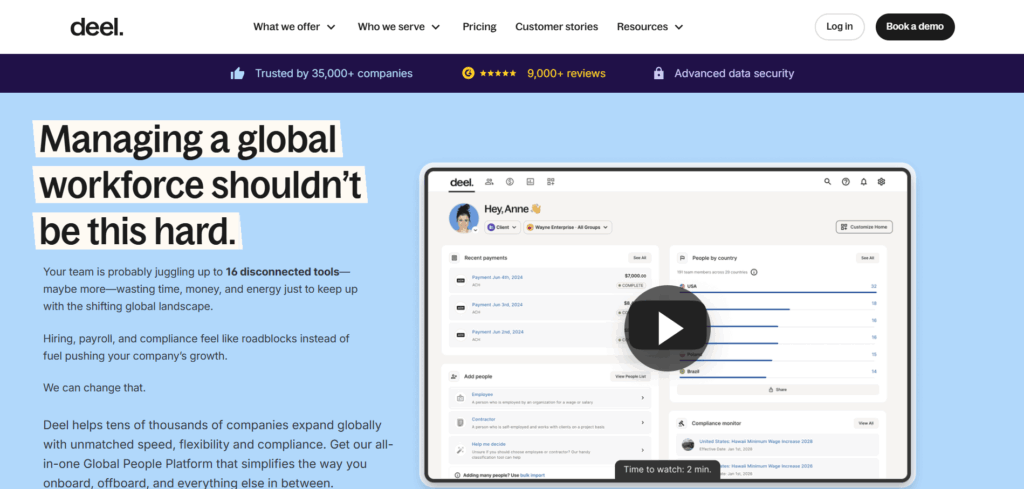
Deel: Extensive global reach (150+ countries). Hybrid entity/partner model. Faster onboarding than most but compliance depth varies by provider used. Better suited for multi-country expansion than Germany-only hiring.
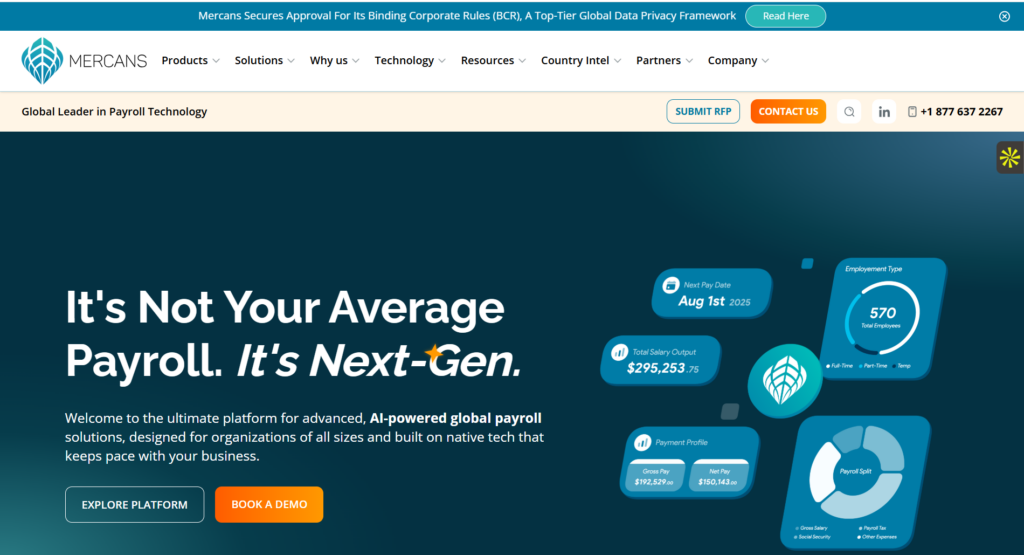
Mercans: Direct-entity EOR with strong Germany specialisation. Particularly suited to regulated industries (life sciences, finance) where compliance documentation depth matters. Custom pricing.
Velocity Global: Hybrid model with advisory support included. Strong in regulated sectors. Slightly less suited to very fast onboarding but provides strong termination risk support.

Lano: Partner-led EOR with an EU-first focus. Lowest price point makes it attractive for startups. Works best for straightforward roles; less suited to complex compliance scenarios or senior hires.

If you are a startup evaluating EOR options across multiple markets including Germany, see our guide to the top EOR services for startups for a startup-specific perspective.
Employer of Record Germany vs. Setting Up a Local Entity
This is the core strategic decision for companies expanding to Germany. Both paths are valid, but they suit different stages of growth and different risk profiles.
| Factor | EOR in Germany | Local Entity (GmbH) |
|---|---|---|
| Time to hire | 2–4 weeks | 3–6 months |
| Upfront cost | €0 setup (EOR fee only) | €15,000 to €50,000+ |
| Ongoing cost | Lower: pay per employee | Higher: fixed overhead |
| Legal employer | EOR entity | Your German GmbH/AG |
| Employment risk | Shared with EOR | Entirely yours |
| Payroll management | EOR handles | You or local accountant |
| Works Council | EOR manages | You manage |
| Flexibility to exit | High: terminate EOR contract | Low: entity dissolution costly |
| Best for | 1–20 employees, testing market | 20+ employees, long-term certainty |
The EOR is the right choice when: you are testing the German market, hiring a small team (under 15 employees), working on a project with uncertain duration, or need to move faster than entity incorporation allows.
A local entity (GmbH) is the right choice when: you have committed to Germany as a core market, are hiring 20+ employees, require direct employment relationships for regulated roles, or plan a long-term German operational presence.
Compare with our EOR USA guide
Many companies use an EOR to enter Germany and transition employees to their own GmbH once scale is confirmed. This is a well-established path. Most EOR providers support the transition. Employees can be transferred with continuity of service recognized; but the transition must be planned with legal support to preserve employee rights under German law.
Employer of Record vs. PEO in Germany: Key Differences
These two models are frequently confused. In Germany, the distinction carries serious legal consequences.
| Criteria | Employer of Record (EOR) | PEO |
|---|---|---|
| Legal employer | EOR (no entity needed) | Client company (entity required) |
| Entity requirement | None | German GmbH or branch required |
| Liability | EOR assumes employment liability | Shared: client retains liability |
| Compliance management | Full: EOR handles all | Partial: client manages core HR |
| Works Council | EOR manages | Client manages |
| PE risk | Mitigated through EOR structure | Higher: client has direct presence |
| Best use case | Market entry, small teams | Established German operation |
Using a PEO structure in Germany without an established local entity exposes your company to permanent establishment (PE) risk and employment law violations. German authorities do not recognise co-employment arrangements where the client company has no local legal presence. If you do not have a German entity, you must use an EOR; not a PEO.
Industries That Most Commonly Use EOR Services in Germany
- Technology & SaaS: Fast-moving hiring cycles for engineers, product managers, and sales roles. EOR allows speed-to-hire while maintaining compliance in a competitive talent market.
- Life Sciences & Pharma: Regulatory roles require meticulous compliance. EOR providers with documented German HR expertise are preferred. Works Council obligations common in this sector.
- Manufacturing & Logistics: Regional operational roles (quality, logistics, plant management) where local compliance, including shift-work regulations under ArbZG — is critical.
- Professional Services & Consulting: Specialist advisors and project-based consultants. EOR prevents misclassification as contractors, a significant compliance risk in German law
- Startups & Scale-Ups: Testing the German market before committing to entity costs. EOR gives founders a compliant hire without board resolutions or incorporation overhead.
How to Choose the Best EOR in Germany: Evaluation Checklist
Selecting an EOR is not a commodity decision in Germany. The wrong provider does not just create friction; it creates legal exposure. Use this checklist before signing any EOR agreement.
| Question to Ask | Why It Matters |
|---|---|
| Does the EOR operate a direct German legal entity? | Partner-based EORs introduce a sub-vendor layer. Compliance quality varies. |
| How are Works Council (Betriebsrat) obligations managed? | Required for 5+ employees. Consultation required before dismissals and certain changes. |
| What is the termination handling process? | Ask for sample documentation. Weak termination support is the #1 source of EOR disputes. |
| Are collective bargaining agreements (Tarifvertrag) monitored? | Industry-level CBAs may override the employment contract. EOR must track these. |
| Is GDPR-compliant data processing included? | Employee data processed in Germany is subject to strict GDPR. EOR must act as data processor. |
| What are the full pricing components? | Clarify setup fees, per-employee monthly fees, offboarding costs, and legal advisory inclusions. |
| What is the SLA for payroll errors? | German payroll errors can result in employee complaints and regulatory scrutiny. |
| Can you speak with a local German HR/legal contact? | If the EOR cannot provide a local contact, that is a red flag for Germany-specific compliance depth. |
Compliance Risks When Hiring in Germany
Germany’s enforcement environment is consistent and well-resourced. The following risks are commonly encountered by companies using EOR services, particularly when the provider lacks Germany-specific depth.
- Worker Misclassification: German authorities actively audit contractor arrangements. If a worker classified as a freelancer is found to be an employee (Scheinselbstständigkeit), the company owes backdated social contributions plus penalties.
- Permanent Establishment Risk: If your German employee concludes contracts, manages clients, or acts with sufficient authority, German tax authorities may determine a PE exists, triggering corporate tax exposure. EOR structuring mitigates but does not eliminate this risk.
- Termination Without Works Council Consultation: If a Works Council exists and is not consulted before dismissal, the termination is null and void under German law.
- Non-Compliant Employment Contracts: Contracts missing required information under the NachwG expose the employer to fines of €2,000 per employee.
- Incorrect Tarifvertrag Application: If an industry collective bargaining agreement applies to the role and is not applied, the employee can claim backdated entitlements for the full limitation period (3 years).
- GDPR Data Processing Failures: Employee data processed outside a compliant GDPR framework can result in fines up to €20 million or 4% of global annual turnover under Article 83 GDPR.
Mitigate Your Hiring Risks
Let Peorient navigate these legal complexities and find the perfect compliant EOR partner for your German expansion.
Book a Call TodayConclusion: Hiring in Germany Requires Precision
Germany’s employment market rewards preparation. Compliance is not a box to check — it is an ongoing operational responsibility. Employment contracts, payroll contributions, notice periods, Works Council obligations, and collective bargaining agreements all interact. Missing one layer creates exposure in another.
An Employer of Record in Germany removes the structural complexity. It gives companies a compliant legal presence without the fixed overhead of entity incorporation. But the model only works as well as the provider behind it.
Choose based on Germany-specific expertise, not global footprint. Ask for evidence of local legal teams, Works Council experience, and termination track records. The best EOR for Germany is the one that understands Germany specifically, not just one that covers 150 countries.
Peorient is an independent EOR and PEO advisory platform. We help companies compare employer of record providers based on real hiring requirements: not marketing materials. Our team evaluates Germany-specific compliance depth, pricing transparency, termination handling, and Works Council experience.
Peorient's advisory support is absolutely free!
It includes hands-on provider shortlisting, side-by-side comparison, and expert guidance through your decision. If you are planning to hire in Germany and want confidence in your EOR choice, contact us for a free initial recommendation.
FAQs
-
Is an Employer of Record legal in Germany?
Yes. EOR arrangements are legal in Germany when properly structured. The EOR must hold a valid German legal entity, maintain compliant employment contracts, and operate within the framework of the AÜG where applicable. Improperly structured arrangements, particularly those that resemble prohibited labor leasing, can create compliance risk.
-
How long does it take to hire through an EOR in Germany?
Most EOR providers can onboard an employee in Germany within 2–4 weeks of contract signing. This compares to 3–6 months for entity incorporation. Timeline depends on the EOR's readiness, the employee's notice period at their current employer (often 1–3 months for senior roles in Germany), and the complexity of the contract.
-
Do I need to worry about Works Council obligations when using an EOR?
Yes. The Works Council right is triggered at the establishment level. If 5 or more employees work at the same establishment (including EOR-employed workers in some interpretations), employees can elect a Works Council. Once established, it must be consulted before dismissals, role changes, and certain HR decisions. A good EOR manages this proactively.
-
What is the cost of an Employer of Record in Germany?
EOR fees in Germany range from approximately €299 to €800+ per employee per month, depending on the provider model, service scope, and number of employees. Setup fees (€500–€2,000), termination handling fees, and legal advisory costs may be charged separately. Always request an all-inclusive quote and compare total cost of service, not just the headline monthly rate.
-
Can an EOR manage collective bargaining agreement (Tarifvertrag) obligations?
A reputable EOR should. Tarifverträge can apply by industry, region, or employer membership in an employer association. They frequently set minimum wages, additional leave, and benefits above statutory minimums. If a Tarifvertrag applies to your employee's role and industry, the EOR must identify and apply it. Failure to do so creates retroactive claims.
-
What happens if I want to transition from an EOR to my own German entity?
This is a well-trodden path. Once you establish a German GmbH, employees can be transferred from the EOR to your entity. Under German law, business transfers are governed by § 613a BGB. Employees must be informed, have the right to object, and their existing terms (including seniority) must be preserved. Plan the transition with legal support 6–9 months before execution.
-
Is an EOR the same as a staffing agency in Germany?
No. A staffing or temp agency (Zeitarbeit) operates under the AÜG and assigns workers to client companies on a temporary basis — with specific restrictions on assignment duration and equal pay rules. An EOR employs the worker permanently and exclusively for your company's benefit. The relationship is structurally different and must be clearly documented to avoid misclassification under the AÜG.
-
Can I hire both employees and contractors in Germany through an EOR?
An EOR handles employees only. Contractors (Freiberufler or Selbstständige) have a separate legal status in Germany and cannot be managed through an EOR employment structure. However, many EOR platforms also offer contractor management tools (compliance of contract, IP assignment, payment). Be cautious: German authorities apply the Scheinselbstständigkeit test strictly. If a contractor works exclusively for you, controls limited aspects of their work, and follows your instructions, they are likely classified as employees regardless of what the contract says.

Written by
Marcus van der Berg
Director of European Workforce Compliance · 15+ years experience
Marcus covers European employment law for Peorient from his desk in Amsterdam. Former labour lawyer at a Dutch boutique and HR Director at an EU-wide HR-tech scale-up. Registered Works Council Advisor under the WOR. LL.M. European Labour Law, Leiden University.
US Employee Benefits Guide 2026: Costs & Requirements
US employee benefits are less about a long federal checklist and more about health insurance, state rules and competitive expectations. For a professional hire, budget roughly 25–35% above base salary before any EOR fee, then model family coverage and the employee’s work state separately.
-
How to Hire Employees in the US: Foreign Company Guide
September 7, 2026 -

Notice Period Buyout India 2026: Rules, Tax & Formula
September 4, 2026 -
Best EOR in India 2026: 12 Providers Compared
September 3, 2026 -
Gratuity in India 2026: Rules, Formula & Tax Treatment
September 2, 2026